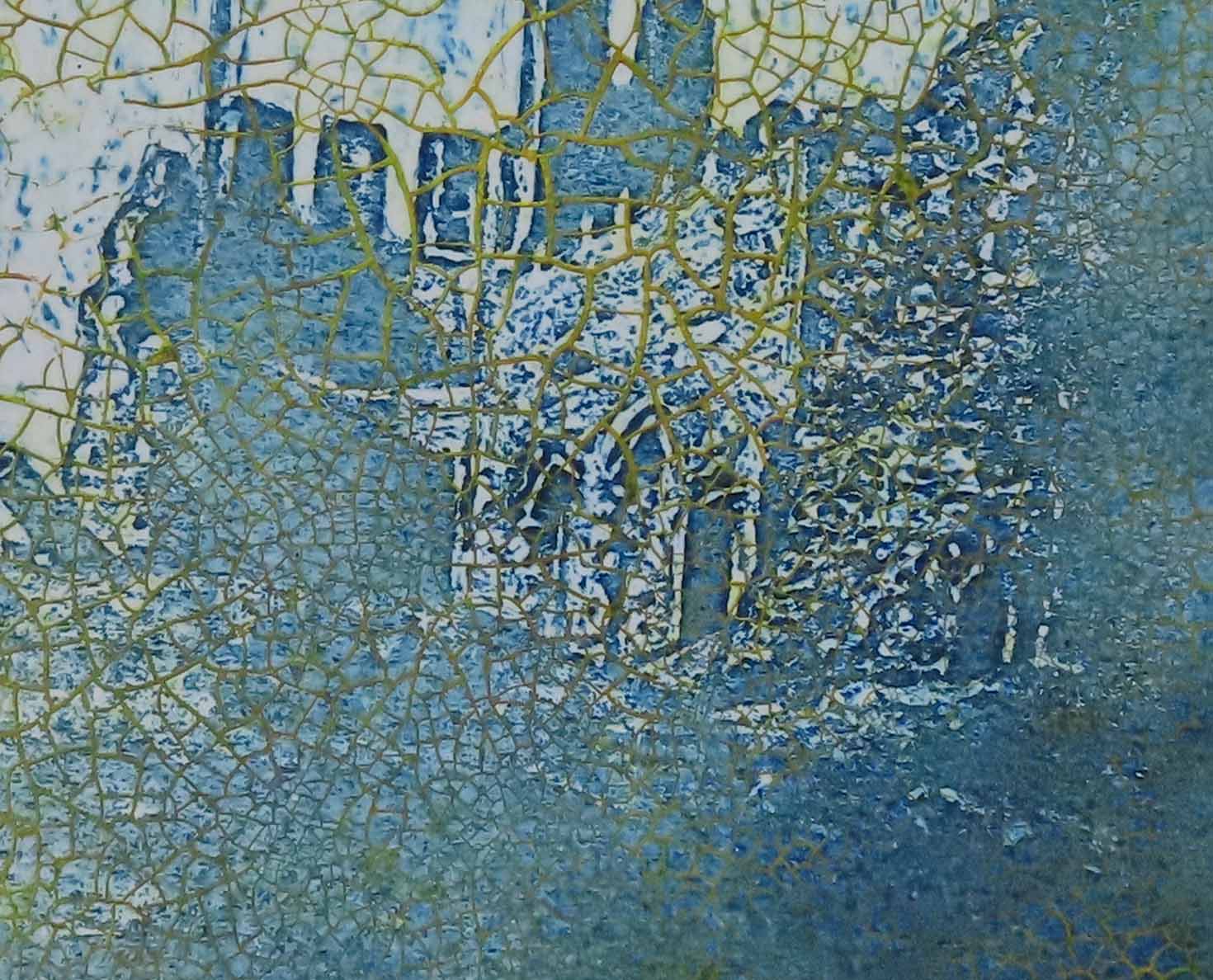
I have been doing a lot of experimenting recently with overlaying a crackle textured printing plate on top of some of my older collagraph printing plates to create some different patterns and age.
I discovered, by accident, a few years ago a reaction to using two different shiny paints which causes the top coat to crack and then produce fine lines which are an interesting texture to print. These are all completely random so are very fun to produce!
Here's how about making a crackle printing plate:
I use a piece of scrap mountboard cut to size. Then I apply a layer of gloss acrylic medium all over the mountboard. It doesn't have to be too even, infact as uneven as possible seems to produce more interesting cracks!
Once the acrylic medium is completely dry I add a layer of radiator paint (it only works with the cheapest possible radiator paint, this one was about £5 from B & M Bargains) Again this layer doesn't need to be even. The radiator paint then needs to dry out overnight and the reaction is best done in a cold room (I have put the prinitng plates in the fridgeto crackle too!)
A tiny bit of cracking is starting in the corners after a few hours but don't be tempted to touch these plates until at least 24 hours has passed and they are completely dry.
Its hard to photograph the cracks as they are white on white! Heres the finished crackle printing plate all inked up with yellow ochre ink and my Dudley Castle collagraph printing plate ready to be printed.
The castle printing plate goes through the printing press first with the edge of the paper caught slightly under the roller so that I can then align and replace the castle printing plate with the crackle printing plate to print on top of the image.
The crackle plate is then printed on top of the castle image. (As the ink is still wet you can see some residual ink left from the castle on the crackle plate)
I'm only printing these in very small editions, four for this one.
A close up of the finished collagraph print so that you can see the interesting textures created by the crackle plate!Clare x